
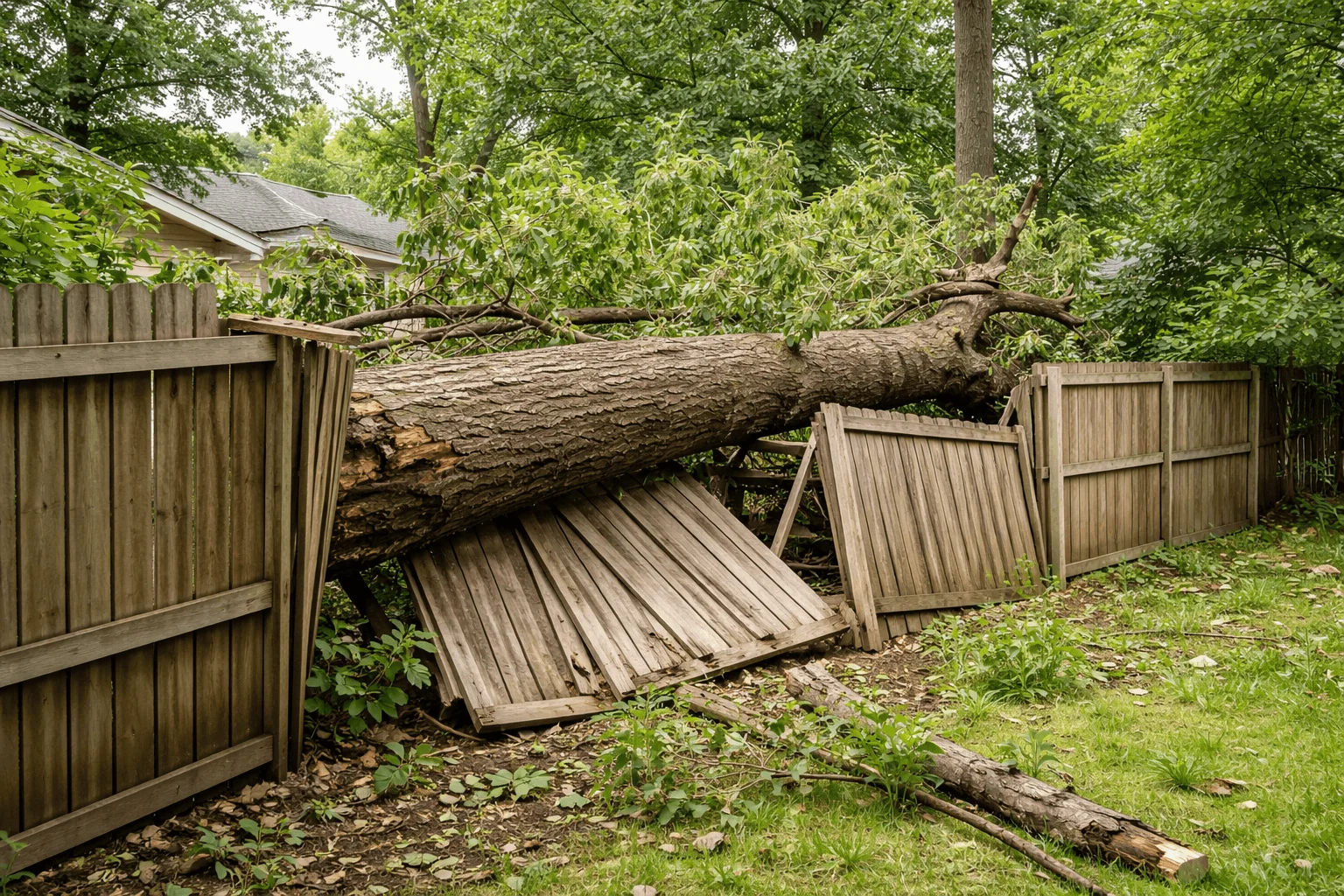
When a tree lands on a fence, the damage can look simple at first, but it usually is not. What seems like “just a tree on the fence” can involve broken panels, pulled posts, sagging sections, blocked access, and sometimes a tricky property line situation too. In some cases, the fence is the only thing holding the tree in place. That is why tree on fence removal usually needs a more careful approach than just cutting it up and dragging it away.
For homeowners, the first questions are usually pretty practical. Is this an emergency? Can the fence be saved? What if the tree came from the neighbor’s side? And how do you remove it without turning a damaged fence into a completely collapsed one?
Tree On Me handles tree on fence removal across Montgomery County, MD. The goal is to remove the tree safely, keep the situation from getting worse during the work, and clear the way for whatever fence repairs need to happen next.
When a Tree Falls on a Fence
A tree can end up on a fence for a lot of reasons. Storms are an obvious one, but not the only one. Saturated soil, root failure, decay, a split trunk, or an already unstable tree can all lead to the same result. Sometimes the whole tree falls. Other times, it is one large section that breaks off and lands across the fence line.
Fence damage also varies more than people expect. In some yards, the tree crushes one span and that is the end of it. In others, the impact pulls posts out of line, twists gates, or transfers weight farther down the fence than you would think. Wood fences can splinter. Vinyl can crack or buckle. Chain-link can bend and lose tension. Even when the fence does not look completely down, it may already be compromised.
This is also where the situation can become more than a fence problem. A damaged fence can create containment issues for pets, reduce privacy, or leave part of the yard open to neighboring properties or the street. If the tree is leaning, shifting, or still partly attached, that adds another layer of concern because the weight may not be settled yet.
Is it an emergency?
Not every tree on a fence is a true emergency in the middle-of-the-night sense. But it does move into a more urgent category when any of these are happening:
- The tree is still shifting or partly suspended
- The fence was helping secure pets or children in the yard
- The tree is also touching a structure, vehicle, or utility line
- A gate, walkway, or access point is blocked
- The tree is hanging over a neighboring area and could drop farther
If the tree is also threatening a house or another structure, Tree On Me’s emergency tree removal service page is the better fit. If the problem started with a tree that has been slowly tipping for a while, their leaning tree removal page may also be relevant. For situations that truly cannot wait, they also offer 24-hour emergency service.
Property Line Considerations
When a tree falls on a fence, one of the first things people ask is who is responsible. That question comes up even faster when the trunk started on one side of the property line and the fence damage is on the other.
This is where it is important to stay practical. Tree removal and legal responsibility are not the same issue. The immediate job is figuring out how to remove the tree safely and prevent more damage. Questions about ownership, responsibility, or reimbursement may still need to be sorted out afterward.
A good starting point is to document the condition of the tree and the fence before any work begins, as long as it is safe to do that. Take photos from both sides if possible, note where the base of the tree appears to be, and keep records of the visible damage.
Coverage for tree damage depends on your individual policy and insurer approval. Contact your insurance company directly.
If there is a disagreement about ownership, boundary location, or liability, speak with an attorney rather than relying on informal advice. A tree company can explain the removal process, but it should not be interpreting property law or deciding fault.
How the Removal Is Done Without Further Damage
Fallen tree fence removal is usually not about speed alone. It is about control. In many fence-impact jobs, the fence is already weakened and cannot handle much more movement. So the removal plan has to work around that.
Access and setup
The first step is looking at how the tree is sitting. Is the weight centered on one section? Are posts already pulled out? Is the tree pinned into the fence, or just resting across it? Is there enough yard access to work from the inside, or does the crew need to approach from another angle?
That assessment matters because the wrong access point can put more pressure on the weakest part of the fence.
Working around posts and panels
Fence posts are often the hardest part to protect. Once posts shift, the repair usually gets bigger. Instead of dragging heavy sections sideways, the tree is typically broken down in a more controlled sequence so the weight comes off gradually. That may mean removing limbs first, then smaller trunk sections, and only then lifting or moving the heavier material.
The exact method depends on the tree, the fence type, and the amount of space available. On tighter residential lots, the crew may need to work in shorter sections to avoid scraping along the fence line or dropping material into the neighbor’s side.
Debris clearance
Once the main weight is off, the debris still has to be cleared carefully. Smaller branches, broken rails, and loose fence pieces can be tangled together, especially with chain-link or older wood fencing. Cleanup is part of restoring safe access, but it is also part of making the damage easier to assess for repair.
Next Steps After the Tree Is Removed
Once the tree is off the fence, the tree work and the fence work usually become two separate things. Removing the tree does not automatically repair leaning posts, broken panels, or hardware damage. In some cases, the fence can be partially braced and repaired. In others, one section may need to be rebuilt.
It helps to do a second round of documentation after removal is complete. Take updated photos of the fence line, the posts, gate areas, and any ground disturbance around the base. That gives you a cleaner record of what the tree impact actually caused once the debris is gone.
A few practical next steps usually include:
- Save photos from before and after removal
- Keep any written notes or job documentation
- Check whether gates still latch and posts still hold
- Separate fence repair estimates from tree removal work
- Talk with your insurance company or attorney if questions remain
That last part matters most when the situation crosses a property line or involves a neighbor’s tree.
Serving Montgomery County
Tree On Me serves homeowners across Montgomery County, MD, including communities such as Rockville, Bethesda, Silver Spring, Gaithersburg, Germantown, Potomac, Wheaton, Kensington, Takoma Park, Olney, Brookeville, and surrounding areas.
Fence-impact removals can look different depending on the property. In tighter neighborhoods, access may be limited and neighboring fences may sit close together. In larger lots, the issue may involve longer fence lines or heavier tree sections. Either way, the approach is the same: assess the load, remove the tree in a controlled way, and avoid creating more damage than the tree already caused.