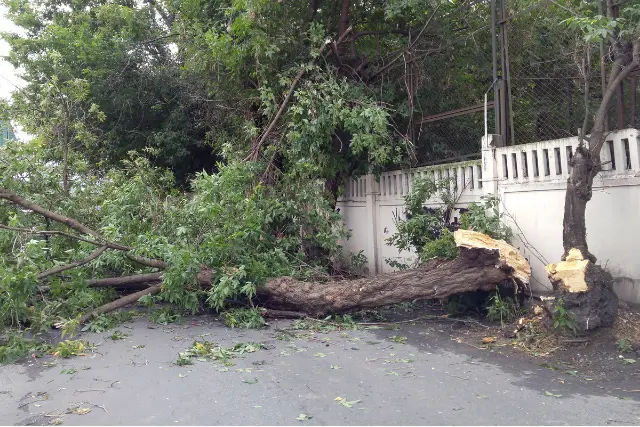
When a tree falls or a large limb comes down, the first question is often some version of: how serious is this? Not every tree situation requires an immediate call — and Tree On Me believes that helping homeowners understand the difference is more useful than treating every situation as an emergency. This article describes what separates an emergency tree situation from one that can be scheduled.
What Makes a Tree Situation an Emergency
A tree situation becomes an emergency when it poses an active, ongoing risk to people, structures, or critical access. The signs a tree may be dangerous include: the tree or limb is in contact with or is actively threatening a structure; the tree has contacted or downed utility lines; the tree is blocking emergency vehicle access to a property; or the tree is visibly unstable in a way that suggests imminent failure over an occupied area.
The presence of structural contact is the clearest indicator. A tree resting on a roof, pressing against a wall, or suspended over an occupied room is an emergency. The structure is under load, the situation can worsen at any point, and temporary measures are limited in what they can address until the tree is removed.
Situations That Typically Require Immediate Response
Tree on a house or roof — any situation where a tree or major limb is resting on a residential or commercial structure. Tree on a garage, carport, or vehicle — same active structural load concern, with added risk from lighter structure types. Tree contacting power lines — contact with or fallen utility lines requires notification to the utility company and coordination before any removal work.
Uprooted tree near a structure with visible root lift — if a tree has partially uprooted and is leaning against or near a structure with the root ball visibly lifting from the ground, the failure may complete at any time. Leaning tree with sudden onset or visible root movement — a tree that was previously upright but has developed a significant lean in a short period, particularly with soil heaving or root exposure.
Situations That Can Usually Be Scheduled
Dead tree not leaning toward a structure — while a dead tree should be removed, one that is standing and leaning away from structures can often be addressed as a scheduled removal. Tree showing decay signs with no immediate lean toward a structure or occupied area — this warrants removal, but on a planned basis.
Small limb on a fence — tree on fence situations involving small-diameter material with no structural contact are typically low priority. Stump — a stump is not a hazard and can be addressed as scheduled work. Tree damage away from structures and utilities — if a large limb has fallen in an unoccupied area of your yard with no structural contact or utility involvement, the cleanup can generally wait for a scheduled appointment.
How to Assess Your Situation
From a safe distance outside, consider these questions: Is any part of the tree or fallen limb in contact with the structure? Can you see visible damage to the roof, walls, or windows? Are there utility lines involved? Is the tree visibly unstable — leaning with visible movement? Is anyone injured or at risk of injury?
If the answer to any of these is yes, treat the situation as an emergency and contact Tree On Me. If the answer to all of these is no, document the situation with photographs and call to schedule removal during service hours. If you are unsure, call and describe what you observe — we will help you assess it accurately.
When to Call Tree On Me
Tree On Me’s 24-hour emergency tree service is appropriate when a tree situation meets the emergency criteria described above. For situations that do not require an immediate response, we can schedule removal as a non-emergency appointment.
A professional hazardous tree assessment is available for situations where you want an evaluation of risk before deciding on next steps. Contact Tree On Me for service throughout Montgomery County, MD.