
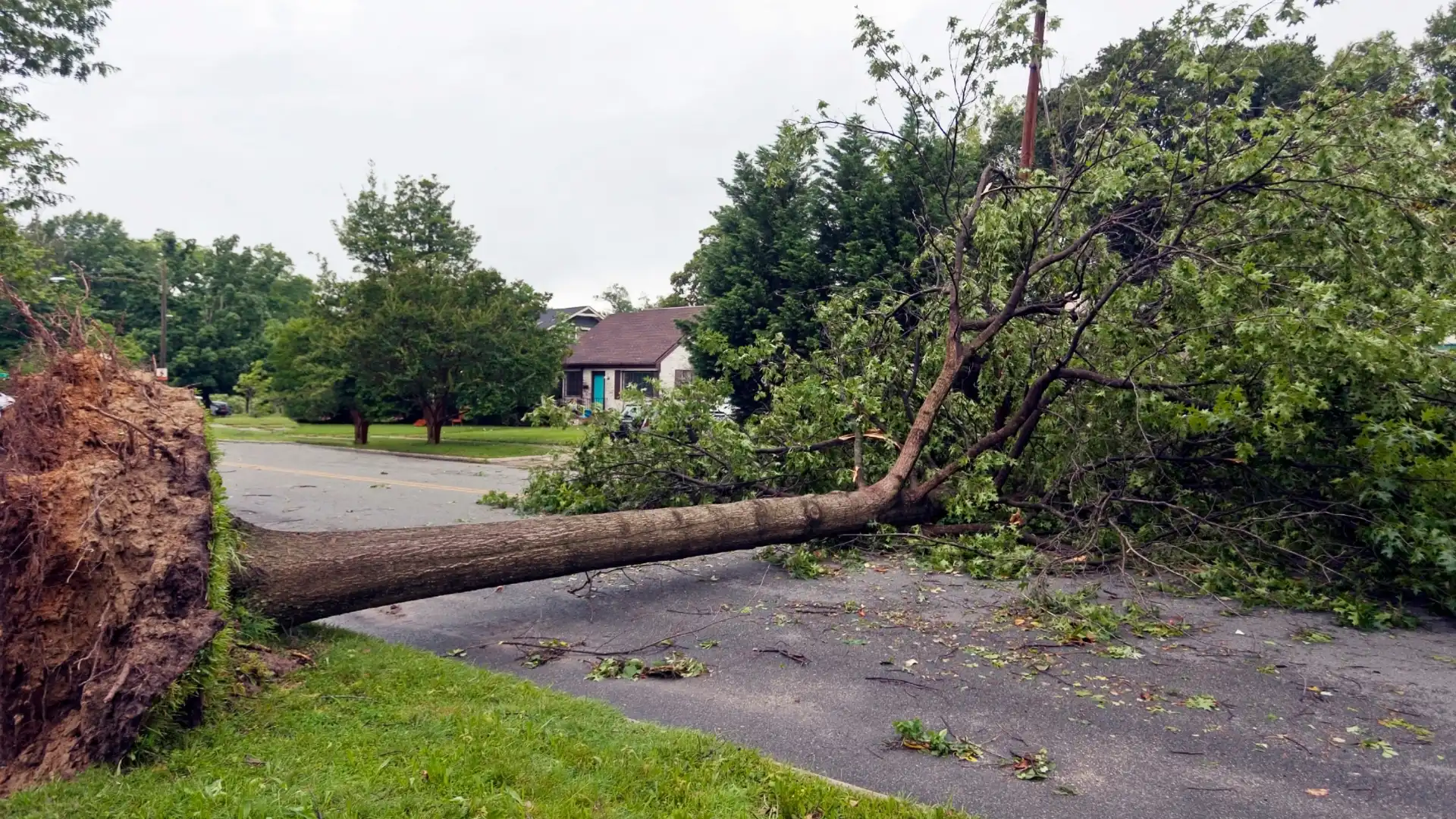
Kensington is one of the oldest incorporated communities in the Montgomery County area, with a history of residential development stretching back to the late 1800s. The housing stock reflects that age: Victorian cottages, Craftsman bungalows, and early 20th-century foursquares that were built when the community was first platted as a railroad suburb. The trees that have grown alongside these homes for 80, 100, or in some cases more than 100 years represent a tree canopy that is correspondingly aged. When a tree falls on a Kensington home, the removal involves older construction with original architectural details that warrant additional care during the work. Tree On Me provides structural emergency tree removal throughout Kensington, with attention to the older-structure conditions this community presents.
Kensington's Tree Canopy
A community that has been residential since the 1890s has had time to develop extraordinary individual tree specimens. Some of the oaks, tulip poplars, and American beeches in Kensington’s residential yards have reached dimensions rarely seen in newer developments. A mature white oak on a Kensington property may have a trunk diameter of three feet or more and a canopy that spans across the house and into the adjoining yard.
Trees of this size and age are also trees that have had a century to develop structural changes: cavity formation, major limb die-back, root plate changes from decades of landscape modification, and the slow progression of fungal decay in the heartwood. None of these changes necessarily mean a tree is immediately dangerous, but they are characteristics that affect how structural failure occurs when it does happen, and how removal needs to be approached.
Removing Trees from Older Construction
The homes in Kensington’s core historic residential area have original architectural features that require care during removal work. Victorian cottages and Craftsman bungalows often have decorative porch elements, bay windows, original wood trim, and ornamental eave details that cannot be easily replaced. Slate and clay tile roofs remain on many of these homes, preserved as original or replaced in-kind during renovations.
When a tree falls on one of these structures, the physical impact has already occurred. The question during removal is whether the process of removing the tree causes additional damage to architectural features that a less careful approach might affect. This means lifting sections rather than dragging them when the surface below is fragile, using ropes and rigging to control the position of material during descent, and working deliberately rather than quickly when the structure’s details require it.
The initial site assessment in Kensington covers not only the tree situation but also the visible condition of the structure below. Where original materials are at risk of secondary contact during removal, the cutting sequence is adjusted accordingly. For trees on roofs and older structures in particular, see the detail on how Tree On Me handles trees that fall on roofs.
When Crane Assistance Is Appropriate in Kensington
Larger tree specimens on Kensington properties may warrant crane-assisted removal, particularly when the tree’s position relative to the structure and the lot boundaries makes standard rigging impractical. A large-diameter oak or tulip poplar that has landed across a historic cottage presents a significant weight and section management challenge. The crane provides a vertical lift path for heavy sections, which is preferable to managing them down alongside a fragile structure.
Access for crane staging in Kensington’s residential streets requires identifying a suitable location, as older neighborhood streets were not designed for heavy equipment. Tree On Me determines crane need on a job-by-job basis after the site assessment. For more on how crane-assisted removal works and when it is applicable, see the crane-assisted tree removal page.
Kensington's Lot Pattern and Neighborhood Context
Kensington’s original residential lots are modest in size relative to later Montgomery County developments. The small lot dimensions, combined with trees that have grown to large diameter over a century, create a situation where the tree and the house occupy most of the same lot footprint. There is often limited clearance between the structure and the neighboring property.
The incorporated town of Kensington includes the Howard Avenue antique district and several blocks of commercial use, but the surrounding residential area is the context for most structural tree situations. The terrain in parts of Kensington also includes gentle slopes associated with the Rock Creek watershed drainage, which can affect how material moves once it has been sectioned.
Documentation and Contractor Coordination
For homes with historic or original materials, thorough documentation before and after removal is particularly important. Photographs that capture the original condition of architectural elements adjacent to the removal zone create a record that is useful when coordinating with restoration contractors for repairs.
Tree On Me can provide a removal summary and photos on request after the job is complete. Coverage for tree damage depends on your individual policy and insurer approval. Contact your insurance company directly. Contractor coordination for structural repairs and any restoration of original architectural features is outside Tree On Me’s scope.
Serving Kensington, MD
Tree On Me provides structural emergency tree removal throughout Kensington, including the historic residential core, the areas around Connecticut Avenue, and the surrounding Montgomery County communities. Service is available 24 hours a day for structural tree situations. For structural tree removal from Kensington homes, see the main service overview. Contact Tree On Me to discuss your situation.