
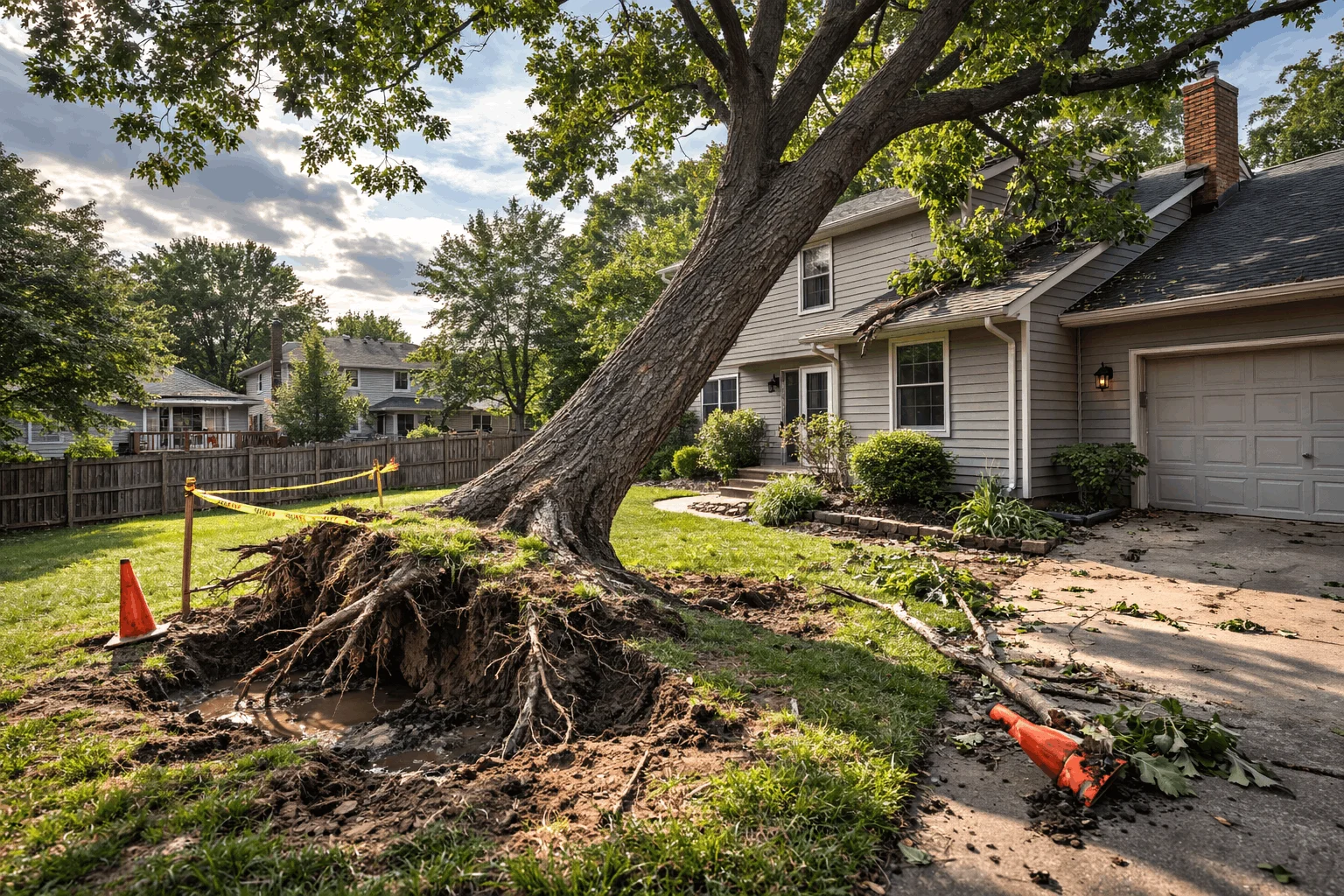
Bethesda’s residential neighborhoods are characterized by mature canopy, established lot patterns from the mid-20th century, and homes that sit in close proximity to one another and to the trees around them. When a tree comes down on a structure in Bethesda, the removal environment is typically more constrained than what you’d find in a newer suburban development with wider streets and more staging space. Tree On Me handles structural emergency tree removal throughout Bethesda, with attention to the close-quarters conditions that define this community.
Bethesda's Residential Tree Environment
The neighborhoods closest to the Bethesda commercial core, including East Bethesda and the blocks between Wisconsin Avenue and Connecticut Avenue, contain some of the county’s oldest residential development. Homes built in the 1940s and 1950s sit on lots that were generous by the standards of the time but now feel close when the trees planted alongside them have reached 50 to 80 feet in height.
The Kenwood neighborhood, known for its Japanese cherry trees, also contains substantial residential oak canopy. These oaks have grown over the decades to span driveways, overhangs, and in some cases neighboring property lines. When a large oak loses a primary limb or fails at the root plate, the affected area may include more than one property.
The Edgemoor neighborhood features larger lots with significant individual tree specimens, including tulip poplars and oaks that have had space to develop broad crowns over adjacent structures. The tree profile here differs meaningfully from the street-tree-heavy grid of East Bethesda, and so does the removal approach.
Close-Quarters Removal Conditions
In Bethesda’s older residential areas, the distance between the work zone and the property line is often small. Trees may be planted close to structures on both sides of a lot line, meaning that rigging and lowering must be controlled carefully to avoid contact with adjacent fences, structures, or landscaping.
Street access is another factor. Older Bethesda blocks were designed for narrower vehicles. Parking requirements, parked cars, and narrow tree lawns can limit how close a truck or chipper can be positioned relative to the work zone. The site walk at the start of every job covers access constraints before any equipment is staged.
Overhead utilities in Bethesda run through many older residential blocks. Distribution lines, service drops, and communication cables can run through or adjacent to the canopy of trees that are being worked on. Removal sequencing accounts for utility proximity throughout the job.
Trees on Roofs in Bethesda
The combination of tall trees and close lot lines in Bethesda means that when a tree or large limb fails, a nearby roof is often the stopping point. Homes in Bethesda from the 1940s through the 1960s typically have pitched slate, asphalt, or wood shake roofs with traditional framing. These structures absorb impact differently than newer engineered roof systems.
For trees on roofs in Bethesda, the removal approach works from the canopy inward, releasing weight in stages to reduce further load on the structure below. The goal is to lift material off the roof rather than drag it, which minimizes secondary damage to roofing materials and gutters. See how Tree On Me handles trees that fall on roofs in close-lot neighborhoods for a more detailed look at the removal sequence.
Leaning Trees and Pre-Failure Situations
Bethesda’s older canopy also produces situations where a tree has not yet fallen but is showing signs of structural compromise. A tree that has developed a lean toward a house, or that has a visible crack or included bark at a major branch union, may need to be assessed and removed before failure occurs.
These situations require a hazard assessment before removal planning can begin. A leaning tree adjacent to a structure is a different scope from an emergency removal, but the underlying approach to evaluation is similar. Tree On Me provides assessment for leaning trees that pose a structural risk to adjacent buildings.
Serving Bethesda, MD
Tree On Me provides structural emergency tree removal throughout Bethesda, including East Bethesda, Kenwood, Edgemoor, Wildwood, and the surrounding Montgomery County neighborhoods. For structural tree removal from Bethesda homes, see the main service overview. Contact Tree On Me to discuss your situation.