Licensed Tree Experts Serving Montgomery County 24/7
Severe weather events in Montgomery County, MD cause sudden tree failures that threaten homes and property. Tree On Me of Montgomery County addresses trees toppled by wind, broken by ice accumulation, or compromised by heavy rain and saturated soil. Professional assessment and removal help reduce hazards after weather events.
Intense storms develop quickly in Maryland summers. High winds, heavy rain, and occasional severe thunderstorm warnings create conditions for tree failures. Straight-line winds can go so fast and snap trunks and uprooting shallow-rooted trees.
Ice accumulation adds significant weight to branches. A half-inch of ice coating on tree canopies can add hundreds of pounds. Branches bend under this weight, eventually breaking if ice persists. Widespread damage occurs when ice storms affect large areas.
While less frequent than in northern climates, Montgomery County occasionally receives substantial snowfall. Wet, heavy snow accumulates on branches similarly to ice, causing breakage in trees with included bark or weak branch unions.
Hurricanes and tropical storms tracking up the East Coast sometimes bring sustained winds and heavy rain to Montgomery County. Trees growing in saturated soil lose root stability and topple more easily during wind events.
These straight-line wind systems move through the mid-Atlantic region periodically. Derechos produce widespread wind damage across multiple communities, creating high demand for storm damage services.
Not all storm-affected trees need immediate removal, but certain damage patterns require prompt professional service.
After weather events in Gaithersburg or Potomac, Tree On Me of Montgomery County evaluates damage systematically.
Assessment begins with identifying immediate hazards. Downed power lines, gas leaks, and structural damage to buildings take priority. Tree work near active utilities requires coordination with utility companies.
Crews categorize damage levels. Complete failures require immediate removal. Partially damaged trees receive evaluation for potential recovery or necessary removal. Minor damage may need future monitoring but not emergency.
Trees on structures receive highest priority. Trees blocking access points come next. Trees in danger of additional failure follow. Standing damaged trees with lower failure risk may be addressed after immediate hazards are resolved.
Assessment considers how tree damage affects the overall property. Multiple downed trees may require equipment staging areas and access planning. Cleanup complexity increases with more damaged trees.
Removing storm-damaged trees requires adapting to compromised wood, tension, and unpredictable failure points.
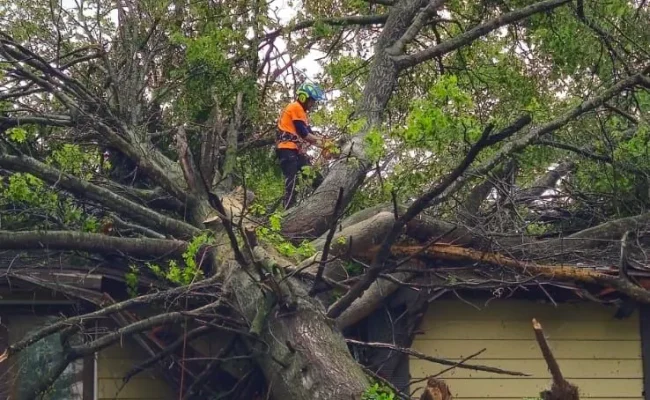
Storm-broken trees often have significant tension in bent or partially failed sections. Cutting tension wood without proper technique can cause violent releases. Trained crews identify tension and compression zones before making cuts.
Large storm-damaged trees frequently require crane support. Cranes provide stability during sectional removal and help prevent additional property damage from falling pieces.
Complex rigging setups control how sections move during cutting. This control is essential when working with split trunks or partially attached branches.
Storm events create substantial debris. A single mature tree can produce several tons of wood and brush. Efficient debris handling and hauling becomes important during multi-tree removals.
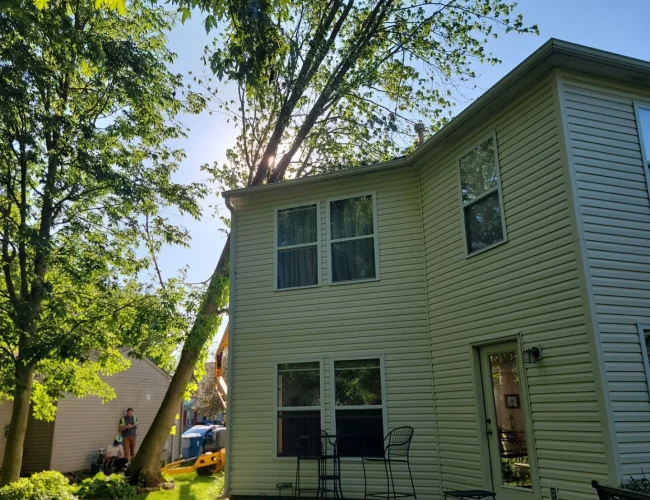
Montgomery County experiences several weather patterns that stress trees throughout the year. Understanding these patterns helps property owners recognize when storm damage requires professional attention.
Properties with several storm-damaged trees require systematic approaches.
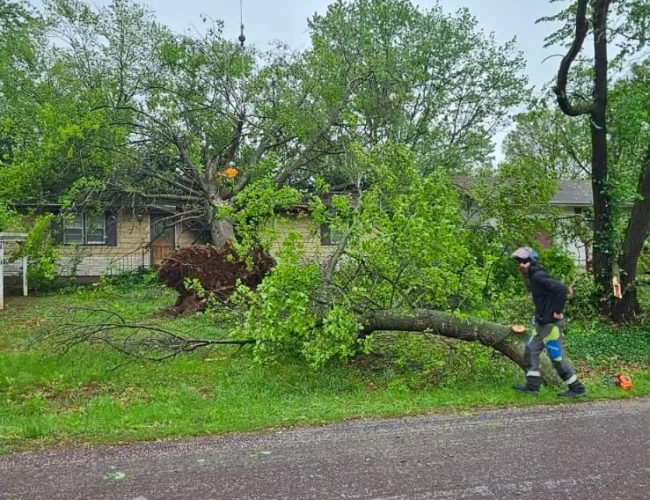
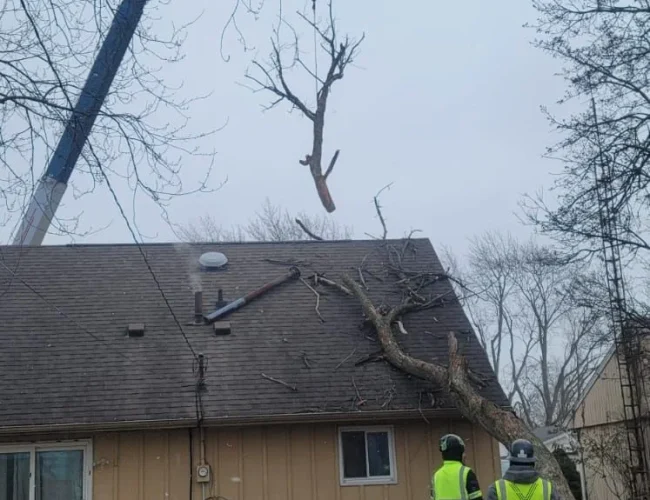
Widespread storms affecting Montgomery County create high demand for tree services. Property owners should understand that:
Montgomery County residents in Silver Spring, Rockville, and throughout the area can prepare for storm season by maintaining trees preventively. While storms will still cause some damage, healthy trees with proper structure withstand weather events better than declining or poorly maintained trees.
Our 24/7 emergency response service supports availability during and after major storms. For common questions about storm damage and insurance, visit our FAQ page.